



Resilient by Design: Mangroves of the Arabian Gulf
Resilient by Design: Mangroves of the Arabian Gulf


Written By:
Rama Kaysoon, Ecologist and Junior Environmental Consultant, Terra Nexus
1. Introduction
At the narrow boundary where land meets sea, mangroves persist as one of the few tree systems capable of surviving some of the planet’s harshest coastal conditions. Mangroves are salt-tolerant trees and shrubs that occupy the intertidal zone between land and sea. Globally, they are associated with tropical coastlines, yet in the Arabian Gulf and surrounding seas, mangroves persist under some of the most extreme environmental conditions. High salinity, extreme summer temperatures, minimal to no freshwater input, and limited sediment supply make the Gulf one of the harshest regions for mangrove survival. Despite these constraints, mangroves play a critical ecological and socio-economic role across Gulf countries, providing coastal protection, supporting biodiversity, and contributing to climate mitigation through carbon sequestration.
Mangroves also carry rich cultural and economic value in the region. Communities in the United Arab Emirates (UAE), for example, have a long history with mangroves, which have served as important ecological, economic, and cultural resources over time (Friis & Killilea, 2024). Traditionally, coastal inhabitants utilized mangrove wood for fuel or construction and even fed livestock on mangrove foliage during dry spells. Today, Gulf countries increasingly recognize mangroves as natural assets, from carbon sinks that bolster climate goals to green oases that enhance coastal livability. In short, mangroves are vital “green lifelines” for Gulf ecosystems and society, knitting together environmental and urban realms in a sustainable way.
In recent decades, mangroves in the Gulf have received increased attention as nature-based solutions for climate adaptation and sustainable coastal planning. Their protection and restoration are now central to national environmental strategies across the United Arab Emirates (UAE), Saudi Arabia, Qatar, Bahrain, and Oman.
2. Mangrove Species in the Gulf Region
Across most of the Arabian Gulf, mangrove ecosystems are overwhelmingly dominated by a single species, the grey mangrove Avicennia marina. This species is the only naturally occurring mangrove documented in the Gulf waters of the United Arab Emirates, Qatar, Bahrain, Kuwait, and the eastern (Gulf-facing) coast of Saudi Arabia.
The low species diversity of Gulf mangroves contrasts sharply with tropical mangrove systems elsewhere, where multiple tree species often coexist. This reflects the Gulf’s extreme environmental conditions, which only highly stress-tolerant mangrove species can withstand. Other mangrove species, such as Rhizophora mucronata, are absent from most of the Gulf, however, they can be found in the Red Sea coast of Saudi Arabia where environmental conditions are more favorable.
3. Regional Distribution
United Arab Emirates: Mangroves in the UAE are exclusively composed of Avicennia marina and constitute the country’s only evergreen forest ecosystem. They are distributed along sheltered lagoons, tidal creeks, and intertidal mudflats, with the largest and most continuous stands occurring in Abu Dhabi, alongside smaller systems in Umm Al Quwain, Ras Al Khaimah, Ajman, and the east coast at Khor Kalba. Mangrove distribution is strongly constrained by extreme aridity, high salinity, and sediment-poor conditions typical of the region. Despite these environmental limitations, the UAE has adopted an ambitious mangrove agenda that increasingly extends beyond restoration of historically occurring stands. As part of its climate and blue economy strategies, the country has committed to planting 100 million mangrove trees, reflecting a shift toward large-scale mangrove expansion and afforestation, and positioning mangroves as a key nature-based solution for carbon sequestration, coastal protection, and climate resilience (Friis & Killilea, 2024).
Qatar: Natural mangrove stands in Qatar are also dominated exclusively by Avicennia marina and are primarily concentrated along the northeastern coast, particularly in Al Khor and Al Dhakhira. Additional mangrove stands occur as planted or restored sites along parts of the eastern and northern coastline, reflecting long-term afforestation and restoration efforts in response to coastal development pressures (Al Absi et al., 2025).
Oman: Mangroves in Oman occur along sheltered coastal inlets, lagoons, and estuaries, particularly along the northern coast near Muscat (e.g. Qurayyat and Al Qurm), as well as at selected sites along the Arabian Sea coast such as Mahout Island. These systems are dominated by Avicennia marina and are closely linked to wadi-driven freshwater and sediment inputs. While historically important for provisioning services, Omani mangroves are now increasingly valued for their regulating and cultural ecosystem services, including coastal protection, carbon sequestration, and recreation. This shift is reflected in national initiatives such as Oman’s commitment to plant 100 million mangrove trees by 2030 under its Blue Carbon Strategy (Al-Afifi et al., 2024).
Bahrain: Mangroves in Bahrain are extremely limited in extent and are primarily confined to Tubli Bay, where remnant stands of Avicennia marina occupy a small proportion of the national intertidal zone. Species richness and habitat diversity are low, reflecting the country’s arid climate, high sediment salinity, restricted tidal exchange, and long-term human disturbance, which together constrain mangrove growth, regeneration, and spatial expansion (Abou Seedo et al., 2017).
Saudi Arabia: Mangroves in Saudi Arabia occur along both the Arabian Gulf and Red Sea coastlines but are unevenly distributed and largely restricted to sheltered coastal environments. Along the Arabian Gulf coast, mangroves are dominated exclusively by Avicennia marina and occur as relatively small, fragmented, and patchily distributed. In contrast, Saudi Arabia also supports localized populations of Rhizophora mucronata, which are restricted to the southern Red Sea, particularly the Farasan Islands. Compared to the Arabian Gulf, Red Sea mangroves experience relatively lower salinity, softer muddy substrates, and greater nutrient inputs in some areas, resulting in differences in tree height, canopy development, and population structure (Abroguena et al., 2022). Recent national initiatives have also prioritized mangrove conservation and restoration, with large-scale afforestation programs underway along the Red Sea and Arabian Gulf coastlines. Notably, Red Sea Global (RSG) has committed to planting 50 million mangrove trees by 2030, in alignment with the Saudi Green Initiative, which aim to restore ecosystems, including mangroves, through large-scale afforestation and strengthened regulatory institutions.
Kuwait: Kuwait represents the northwestern limit of mangrove distribution in the Arabian Gulf. Mangroves are extremely limited in extent and occur primarily as small, planted or experimentally established stands of Avicennia marina along sheltered sections of the coastline, particularly within Kuwait Bay. However, rapid coastal development, habitat alteration, and limited suitable intertidal environments continue to constrain mangrove survival and expansion in Kuwait (Almulla et al., 2013). It is important to note that Kuwait is often underrepresented in regional mangrove discussions because its mangrove extent is very small and fragmented, not because it lacks mangroves altogether. The literature consistently treats Kuwait as a marginal or near-limit system rather than a core mangrove region.
4. Adaptations to Extreme Gulf Conditions
Mangroves in the Gulf exhibit a range of physiological and structural adaptations that enable survival in highly saline, arid, and thermally extreme environments. From extreme summer temperatures, hyper salinity, minimal freshwater input, high evaporation rates, and nutrient-poor, unstable sediments impose severe constraints on growth, productivity, and spatial distribution. In response, Gulf mangroves, almost exclusively Avicennia marina, exhibit a suite of morphological, physiological, and reproductive adaptations that enable persistence in these marginal environments. Below are some of their adaptations:
Salt-secreting leaf glands
One of the most distinctive adaptations of Avicennia marina is the presence of salt-secreting glands located on the leaf surface. These specialized epidermal structures actively excrete excess sodium and chloride ions absorbed from saline soils and seawater, preventing toxic salt accumulation within photosynthetic tissues. Crystallized salt deposits are often visible on mature leaves, particularly during periods of high evaporation and salinity (Al-Absi et al., 2025), as shown in the image below.
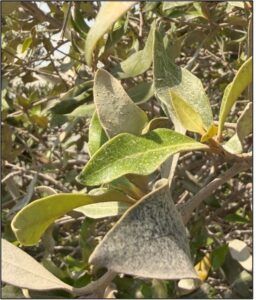
Figure 1: Crystallized salt deposits seen on the leaf surface (Terra Nexus, 2025)
Leaf Structure
Leaves of Gulf mangroves are characteristically thick, leathery, and coated with a waxy cuticle, reducing transpiration under high temperatures and intense solar radiation. This sclerophyllous leaf structure minimizes water loss while maintaining photosynthetic capacity during prolonged periods of heat stress (Friis & Killilea, 2024).
Root Adaptations to Anoxic Sediments
Intertidal sediments in the Gulf are frequently waterlogged, oxygen-poor, and rich in sulfides, creating hostile conditions for root respiration. Avicennia marina overcomes this constraint through the development of pneumatophores, as seen in the image below, which are vertically projecting aerial roots that facilitate gas exchange between the atmosphere and the below-ground root system. These structures allow oxygen to diffuse into submerged sediments, supporting root respiration and detoxification processes. The species also exhibits shallow, laterally extensive root systems, enabling efficient exploitation of surface sediments during brief tidal inundation and maximizing access to limited nutrients and oxygenated zones (Friis & Killilea, 2024).
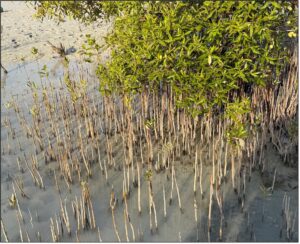
Figure 2: Vertically projecting aerial roots (Pneumatophores) (Terra Nexus, 2025)
Reproductive and Regeneration Strategies
Successful regeneration in extreme environments is facilitated by buoyant, salt-tolerant propagules capable of remaining viable during prolonged exposure to hypersaline waters. Establishment typically occurs during short seasonal windows when temperatures moderate and salinity declines slightly, allowing rapid root anchoring and early growth before stress intensifies again. The ability of Avicennia marina propagules to tolerate high salinity and temperature allows successful recruitment during short seasonal windows when environmental stress is temporarily reduced, contributing to the patchy but persistent distribution of mangroves across the Gulf.
The seeds of Avicennia marina exhibit cryptovivipary, in which embryo development begins while still attached to the parent tree, enhancing early seedling vigor upon release. These propagules possess thick, protective seed coats that help them reduce desiccation.
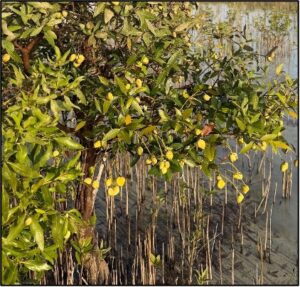
Figure 3: Mangrove seeds (Terra Nexus, 2025)
5. Ecological and Socio-Economic Importance
Despite their limited spatial extent, mangroves in the Arabian Gulf provide socio-economic benefits that are disproportionately high relative to their area. These benefits arise from a combination of ecosystem services that support coastal protection, fisheries productivity, climate regulation, and cultural values, particularly in arid coastal environments where alternative natural buffers are scarce.
For example, mangroves play a critical role in supporting fisheries and coastal livelihoods by functioning as nursery and feeding grounds for a wide range of commercially and ecologically important species, including fish, crustaceans, and mollusks. Juvenile stages of many species utilize mangrove habitats for shelter and food, enhancing recruitment to adjacent coastal and offshore fisheries. In the Gulf, where nearshore productivity is otherwise limited by high temperatures and salinity, mangroves represent key biological hotspots that sustain local fisheries resources.
From a coastal protection perspective, mangroves act as natural infrastructure by attenuating wave energy, stabilizing sediments, and reducing shoreline erosion. Their complex root systems trap fine sediments and enhance shoreline resilience, offering protection against storm surges, tidal flooding, and gradual sea-level rise. This function is particularly valuable in the Gulf, where extensive coastal development, reclaimed land, and low-lying shorelines are highly exposed to climate-related risks.
In recent years, mangroves have received increasing attention due to their capacity for carbon sequestration and long-term carbon storage, positioning them as key components when it comes to climate mitigation and adaptation strategies. Their ability to capture and retain carbon within biomass and sediments has elevated their importance within national climate commitments and nature-based solutions frameworks, particularly as countries in the region advance net-zero and coastal resilience agendas.
Beyond their regulating functions, mangroves hold cultural, recreational, and educational value, historically supporting coastal communities through resource use and, more recently, through ecotourism, research, and environmental awareness initiatives. These combined ecological and socio-economic roles have reinforced the recognition of mangroves as strategic natural assets within sustainable coastal planning across the Arabian Gulf.
6. Threats to Mangroves in the Gulf
Unfortunately, mangroves in the Arabian Gulf are subject to a combination of chronic environmental stressors and intensifying anthropogenic pressures that threaten their long-term persistence. While Avicennia marina exhibits high tolerance to extreme conditions, these systems often function close to their physiological limits, making them particularly sensitive to additional disturbance.
Rapid coastal development, including land reclamation, port expansion, and urban infrastructure, represents one of the most significant threats to Gulf mangroves. Reclamation activities directly result in habitat loss and fragmentation, while indirect impacts include altered hydrodynamics, reduced tidal flushing, and changes in sediment deposition patterns. Studies from Qatar, Bahrain, and the UAE consistently identify coastal modification as a primary driver of mangrove decline, particularly in enclosed or semi-enclosed embayments (Al-Absi et al., 2025; Abou Seedo et al., 2017).
Mangroves in arid environments also rely on limited tidal exchange and episodic freshwater inputs to moderate salinity stress. Disruption of natural hydrological regimes through causeways, dredging, desalination brine discharge, and wastewater effluent can significantly alter salinity gradients and sediment characteristics. For example, in Bahrain’s Tubli Bay, long-term wastewater discharge and anthropogenic sedimentation have been shown to affect mangrove structure, regeneration, and survival, including root burial and reduced recruitment (Abou Seedo et al., 2017). Similar pressures have been reported in other Gulf ecosystems where tidal exchange is restricted.
Moreover, mangroves in the Arabian Gulf already experience some of the highest temperatures and salinities recorded for mangrove ecosystems globally. Rising air and sea temperatures, increasing evaporation rates, and prolonged heatwaves associated with climate change are expected to further intensify physiological stress. Recent studies suggest that while Gulf mangroves are adapted to harsh baseline conditions, continued warming and altered precipitation patterns may exceed their adaptive capacity, particularly during early life stages such as seedling establishment.
Across the Gulf region, mangroves are also increasingly threatened by a phenomenon known as coastal squeeze. This occurs when landward migration of mangroves, which normally allows them to adjust to sea-level rise, is physically constrained by hard coastal infrastructure such as seawalls, roads, ports, and urban development. As sea levels rise and intertidal zones shift landward, mangrove habitats become trapped between advancing shorelines and fixed development boundaries, leading to habitat compression and eventual loss.
Coastal squeeze is particularly pronounced in arid Gulf environments, where mangrove distribution is already restricted to narrow intertidal bands due to extreme salinity, limited sediment supply, and minimal freshwater input. In heavily urbanized coastlines such as those of the United Arab Emirates and Qatar, coastal reclamation and shoreline stabilization projects further limit mangroves’ ability to naturally adapt to changing sea levels (Friis & Killilea, 2024; Al-Absi et al., 2025). Without proactive spatial planning that integrates mangrove migration corridors and setback zones, sea-level rise is likely to exacerbate mangrove loss even in areas where direct clearing is minimized.
7. Conservation and Restoration Efforts
In response to increasing anthropogenic pressures and the recognized ecological value of mangroves, conservation and restoration efforts across the Arabian Gulf have expanded substantially over recent decades. These efforts are primarily focused on protecting remaining natural stands, restoring degraded habitats, and enhancing mangrove extent through large-scale afforestation and rehabilitation programs, particularly in countries where coastal development pressures are particularly high.
Many Gulf countries have prioritized the legal protection of existing mangrove ecosystems through the designation of protected areas, reserves, and environmentally sensitive zones. In the United Arab Emirates, Qatar, and Saudi Arabia, natural mangrove stands are increasingly incorporated into coastal planning frameworks to limit direct habitat loss from development and reclamation. These protection measures aim to preserve not only mangrove vegetation but also the hydrological and sedimentary processes that sustain these systems, recognizing that disruption of tidal exchange can undermine long-term ecosystem stability.
Mangrove restoration in the Arabian Gulf has largely focused on afforestation using Avicennia marina, the only mangrove species naturally adapted to the region’s extreme environmental conditions. Large-scale planting initiatives have been implemented in the UAE, Qatar, Saudi Arabia, and Kuwait, often supported by government agencies, research institutions, and private-sector partnerships. In addition, in recent years mangrove conservation and restoration in the Gulf have increasingly been framed within broader climate adaptation and mitigation strategies, particularly due to the role of mangroves in carbon sequestration, shoreline stabilization, and ecosystem-based coastal defense. National initiatives in the UAE and Saudi Arabia have linked mangrove expansion targets to climate resilience agendas and long-term sustainability strategies, reinforcing the role of mangroves as nature-based solutions rather than standalone conservation projects.
However, despite expanding restoration efforts, challenges remain related to long-term monitoring, ecological performance assessment, and the resilience of restored mangroves under future climate scenarios. Several studies emphasize the need for improved post-planting monitoring, adaptive management, and integration of ecological indicators beyond survival alone, such as growth rates, sediment stabilization, and faunal use. Addressing these gaps is critical to ensuring that restoration efforts contribute to functional and self-sustaining mangrove ecosystems rather than short-term planting success.
8. Conclusion
Mangroves of the Gulf region are ecological outliers, surviving at the edge of environmental tolerance while delivering critical ecosystem services. Their persistence reflects remarkable biological adaptation, but their future depends on effective integration into coastal planning, strong legal protection, and science-based restoration.
As Gulf countries continue to urbanize and face increasing climate risks, mangroves represent a powerful nature-based solution. Protecting and expanding these resilient coastal forests will not only safeguard biodiversity and shorelines but also contribute to long-term climate resilience and sustainable development across the Gulf region.
References
Abou Seedo, K., Abido, M. S., Salih, A., & Abahussain, A. (2017). Structure and composition of mangrove associations in Tubli Bay of Bahrain as affected by municipal wastewater discharge and anthropogenic sedimentation. International Journal of Biodiversity, 2017, Article ID 2084256. https://doi.org/10.1155/2017/2084256
Abrogueña, Jeff Bogart and Alhomran, Ahmed and Alabdullatif, Naif and Al-Mutairi, Thamer S., Mangrove communities and ecological conditions in the Arabian Gulf and Red Sea of Saudi Arabia. Available at SSRN: https://ssrn.com/abstract=5461572
Al-Absi, R., Vethamony, P., Aboobacker, V. M., Rajendran, S., Al-Kuwari, H. A. S., & Al-Khayat, J. A. (2025). Mangroves in the State of Qatar: Influences and adaptations of climate change. Plant Stress, 18, 100999. https://doi.org/10.1016/j.stress.2025.100999
Al Absi, R., Al-Kuwari, H. A., Vethamony, P., Rajendran, S., Mohammed, A. V., & Al-Khayat, J. A. (2024). Mangroves of the Qatar coast, Arabian Gulf: Loss, restoration, and the role in climate change. Journal of Coastal Research, 113, 875–879. https://doi.org/10.2112/JCR-SI113-172.1
Al-Afifi, Z., Raffaelli, D., & Stewart, B. (2024). Public perception of the benefits of mangroves in Qurayyat, Oman: Implications for their sustainable utilisation and management. Advances in Ecological and Environmental Research, 9(5), 33–52.
Almulla, L., Bhat, N. R., Thomas, B., Rajesh, L., Ali, S., & George, P. (2013). Assessment of existing mangrove plantation along Kuwait coastline. Biodiversity Journal, 4(1), 111–116.
Friis, G., & Killilea, M. E. (2024). Mangrove ecosystems of the United Arab Emirates. In J. A. Burt (Ed.), A natural history of the Emirates (pp. 217–242). Springer. https://doi.org/10.1007/978-3-031-37397-8_7
Mishra, P. R., & Ahmed, A. S. O. (2025). From oil economy to blue economy: The untapped potential of mangroves in the UAE’s sustainability transition: A review. Open Journal of Marine Science, 15(4), 226–243. https://doi.org/10.4236/ojms.2025.154013