



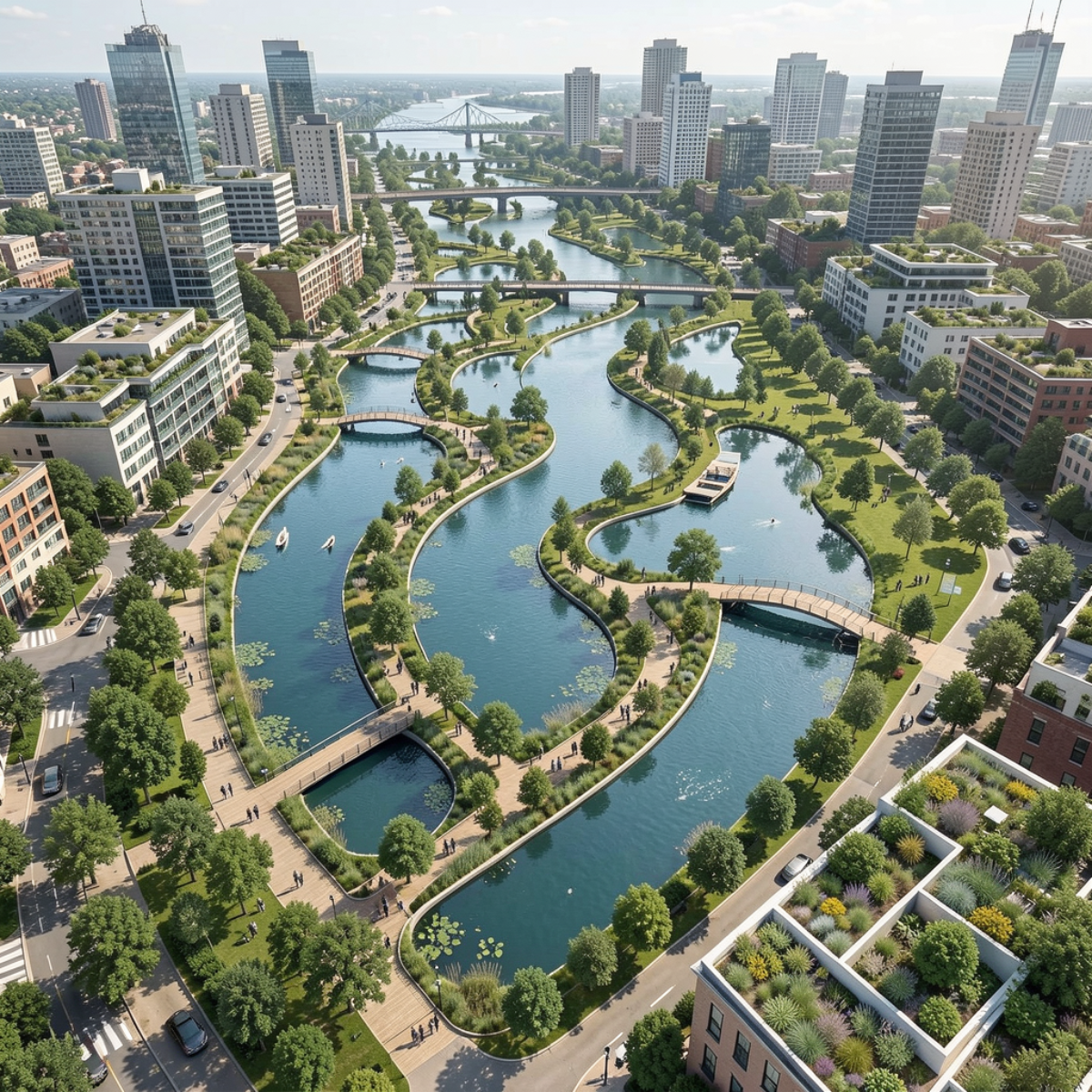
Blue-Green Infrastructure: The Global Standards Shaping Resilient Cities
Blue-Green Infrastructure: The Global Standards Shaping Resilient Cities


Written By:
Roshan Akther, Senior Consultant, Terra Nexus
Abeer Abu Afifeh, Junior Environmental Consultant, Terra Nexus
1. Introduction
Cities today experience unprecedented environmental pressures, becoming hotter, wetter, and more densely populated than at any point in human history. Currently, around 55% of the world’s population resides in urban areas and the United Nations (UN) anticipates that this will further increase to 68% by 2050 (United Nations, 2018). This urban expansion often comes at the expense of natural landscapes. The loss of blue and green spaces, combined with the increase in impervious surfaces, significantly reduces a city’s ability to absorb water during rainfall, making it heavily reliant on grey infrastructure to manage stormwater. Even moderate rainfall can trigger major urban flooding. Climate change is amplifying these challenges, bringing floods and heatwaves, placing additional stress on urban ecosystems and accelerating the loss and degradation of green spaces in cities.
One of the key solutions to address urban and environmental challenges is Blue-Green Infrastructure (BGI). Simply put, BGI integrates water management (blue) with green spaces (green) to create cities that are resilient, healthy, and visually appealing. Examples include parks with ponds, green rooftops, tree-lined streets, wetlands, and rain gardens. Beyond aesthetics, these elements provide long-term environmental benefits that cities cannot afford to ignore.
According to the European Commission, BGI is defined as a “strategically planned network of natural and semi-natural areas with other environmental features designed and managed to deliver a wide range of ecosystem services.” Implementing BGI in urban planning offers a spectrum of ecosystem services, including:
- Provisioning services: food, freshwater, and fuelwood.
- Regulating services: climate regulation, water management, and carbon sequestration.
- Cultural services: recreational, spiritual, and aesthetic benefits.
- Supporting services: soil formation and nutrient cycling.
Extensive research highlights the multifunctional benefits of BGI and its critical role in improving urban ecosystems. BGI helps in numerous ways:
- Flood control: Naturally stores and redirects stormwater.
- Urban cooling: Trees, parks, and water bodies reduce urban heat.
- Biodiversity boost: Provides habitats for plants and animals.
- Resilience: Helps cities recover from extreme weather events.
This article serves as a comprehensive guide to BGI and provides a global benchmark and checklist for planners, architects, and engineers. By integrating BGI from the earliest stages of planning and design, urban planning professionals can:
- Incorporate water management and green spaces seamlessly in projects.
- Naturally manage stormwater and urban heat.
- Promote biodiversity within every development.
- Align urban designs with international best practices.
With Blue-Green Infrastructure, cities are not just built-they are designed to live, breathe, and thrive.
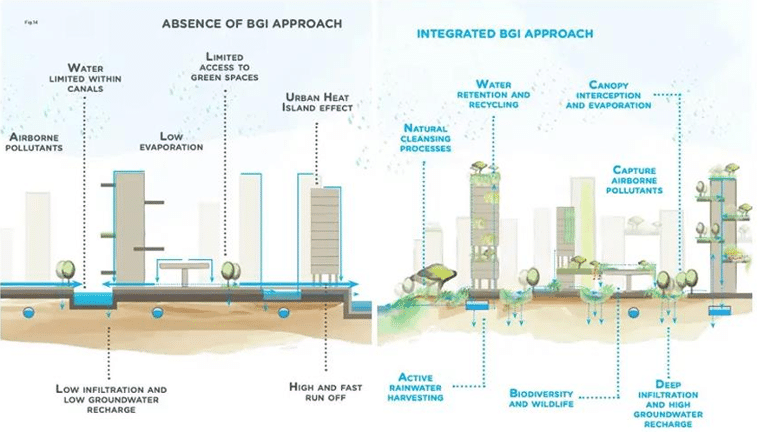
Figure 1: Foundations of Blue-Green Infrastructure (Interreg Europe, n.d)
Blue-Green Infrastructure is built on an integrated framework that combines natural, semi-natural, and engineered systems to manage water, support ecosystems, and enhance urban resilience. These systems are categorized into three interconnected pillars: blue, green, and grey infrastructure. While each pillar serves a distinct function, their true value lies in their coordinated application, where natural processes are reinforced by engineered solutions to deliver sustainable, climate-adaptive, and multifunctional urban environments. Together, these pillars form the backbone of effective Blue-Green Infrastructure planning, ensuring cities can manage stormwater, mitigate climate risks, and enhance biodiversity.
Blue elements represent the water-based components of Blue-Green Infrastructure. These include natural water bodies such as rivers, lakes, and wetlands and engineered hydrological structures like stormwater drains, canals, retention basins, and sustainable drainage systems (SuDS). These elements are essential for regulating the hydrological cycle, managing and storing stormwater, improving water quality, and supporting aquatic ecosystems ( Sustainability Directory, 225).
Green elements are the vegetation-based components of Blue-Green Infrastructure. According to the U.S. Environmental Protection Agency (EPA), as defined under the Clean Water Act, Green Infrastructure refers to the use of vegetation, soils, and natural processes to manage stormwater and provide environmental benefits. These green elements include systems such as parks, street trees, green roofs, rain gardens, bioswales, green corridors, and urban forests, all of which deliver key ecosystem services, cooling urban areas, absorbing stormwater, improving air quality, sequestering carbon, and enhancing habitat connectivity. Within BGI, these vegetated systems work in synergy with water-based elements to create resilient, climate-adaptive, and ecologically functional cities (U.S. Environmental Protection Agency (EPA), 2025).
Gray infrastructure, as defined by the U.S. Environmental Protection Agency (EPA), is traditional stormwater infrastructure in the built environment such as gutters, drains, pipes, and retention basins (U.S. Environmental Protection Agency (EPA), 2024). It generally consists of engineered, built‑environment structures, typically made of concrete, steel, or other durable materials, that are designed to manage water through centralized systems such as pipes, pumps, seawalls, and break waters (Seyedabdolhossein Mehvar, 2021).
2. Who is leading the way?
Global Pioneers
As climate challenges and environmental concerns continue to grow, some countries are setting powerful examples by integrating BGI into their urban planning approches. These global pioneers demonstrate how strategic investment in green and blue spaces can transform urban environments while strengthening climate adaptation.
According to the World Population Review 2025 Infrastructure Ranking, the highest performing nations, Switzerland (Rank 1), Denmark (Rank 2), Sweden (Rank 3), Singapore (Rank 4), and Norway (Rank 5), demonstrate exceptional long-term investment in resilient, adaptive, and environmentally responsible urban systems (World Population Review, 2025). The Quality Infrastructure for Sustainable Development Index (QI4SD), developed by UNIDO and the International Network on Quality Infrastructure (INetQI), evaluates national readiness across five core quality-infrastructure pillars: standards, accreditation, conformity assessment, metrology, and policy. It provides a composite score aligned with the three sustainability pillars of People, Planet, and Prosperity, measuring a country’s ability to support sustainable development, environmental compliance, and resilient infrastructure systems. Countries such as Germany, France, Japan, Australia, United States and United Kingdom and Canada consistently rank among the world’s top performers in the QI4SD Index (UNIDO Knowledge Hub , 2024).
The United Kingdom has advanced BGI through national frameworks and local implementation, integrating green roofs, rain gardens, and park-based flood storage into urban design. Singapore, often described as a “City in a Garden,” demonstrates how dense cities can successfully integrate nature-based solutions to manage heat and stormwater. Japan integrates BGI into disaster-risk reduction through flood control parks, river restoration, permeable surfaces, and retention basins, effectively combining nature-based solutions with advanced engineering to manage extreme climate risks in dense urban areas. Germany has mainstreamed the sponge city concept, using green roofs, permeable surfaces, and urban forests to mimic natural water cycles. In the United States, cities such as Portland and Chicago have scaled up BGI through innovative planning tools and funding mechanisms. China’s Sponge City Initiative represents one of the world’s most ambitious national BGI programs, aiming to absorb and reuse the majority of urban rainfall by 2030. Together, these global pioneers show that when BGI is supported by strong policy frameworks and integrated planning, cities can become more resilient, climate-ready, and people-centered.
Fast Followers
In addition to global pioneers, several countries and regions are rapidly adopting Blue-Green Infrastructure principles, adapting international best practices to local conditions. These “fast followers” are demonstrating that even in climates and urban contexts that differ significantly from Europe or North America, effective BGI strategies can be implemented to enhance resilience, sustainability, and liveability.
Within the GCC region, both the United Arab Emirates (UAE) and Saudi Arabia are emerging as regional leaders. According to the 2024 Quality Infrastructure for Sustainable Development (QI4SD) Index, developed by the United Nations Industrial Development Organization, the UAE ranked 5th globally and 1st in the Arab region (WAM, 2024), reflecting strong national standards, advanced regulatory frameworks, and high institutional capacity. Saudi Arabia ranked 20th globally in the 2024 results, reflecting major progress in regulatory modernization, sustainability alignment, and national infrastructure readiness. Together, these GCC countries are increasingly positioned to adopt and scale BGI, nature-based solutions, and climate-adaptive infrastructure across national development programs.
The following section outlines internationally recognized standards and best practices that underpin these approaches and can be adapted to achieve successful and innovative BGI implementation.
3. Global Standards and Frameworks for BGI
Around the world, several global standards and frameworks have been established to guide professionals, cities, and countries in designing and implementing effective BGI. They offer structured guidance on flood management, stormwater design, biodiversity enhancement, and urban cooling-ensuring that BGI is not just a design trend, but a science-backed, policy-aligned approach to sustainable urban development.
3.1 United Kingdom – SuDS Manual
The UK’s Sustainable Drainage Systems (SuDS) Manual, 2015 provides one of the most comprehensive global guides for designing urban drainage systems. It promotes a range of nature-based and engineered solutions, such as rainwater harvesting systems, green roofs, permeable pavements, swales, detention basins, soakaways, and infiltration basins to manage stormwater in a sustainable and resilient way.
The manual places strong emphasis on four key outcomes: Water quantity (flood mitigation), Water quality (pollution control), Amenity (improved urban spaces), Biodiversity (enhanced ecological value). It establishes detailed design criteria for each of these outcomes and requires planners and developers to give full consideration in every type of development. Importantly, these criteria are interconnected rather than independent. For example, a single bioretention system treating runoff from an urban road can simultaneously achieve flood reduction, improve water quality, support biodiversity, and enhance amenity value.
3.2 European Union – Water Framework Directive & Nature Restoration Law
The EU Water Framework Directive (WFD) and the Nature Restoration Law together form one of the most robust environmental policy frameworks in the world, guiding member states in the protection, restoration, and sustainable management of water bodies and ecosystems.
Since its adoption in 2000, the WFD has been the EU’s primary legislation for water protection. It covers inland, transitional, coastal, and groundwater resources, ensuring an integrated, ecosystem-based approach to water management. The directive regulates pollutants, sets environmental quality standards, and promotes nature-based solutions such as river restoration, wetland conservation, and floodplain reconnection. Complementing the WFD, the Nature Restoration Law is the first continent-wide regulation dedicated to restoring degraded ecosystems at scale. As a cornerstone of the EU Biodiversity Strategy, it introduces binding targets for member states, including: restoring and expanding biodiverse habitats across Europe, achieving no net loss of green urban space and tree cover by 2030, with a steady increase thereafter, restoring drained agricultural peatlands to reduce emissions and revive ecological functions, identifying and removing barriers that block the connectivity of surface waters, enabling healthier river systems etc (European Commission, 2024).
Together, these frameworks drive the EU’s transition toward climate resilience, ecological restoration, and sustainable urban planning, making them global benchmarks for integrating BGI into policy and practice.
3.3 United States – EPA Green Infrastructure / Low Impact Development Guidelines
The U.S. Environmental Protection Agency (EPA) promotes Green Infrastructure (GI) and Low Impact Development (LID) as effective, resilient, and cost-efficient approaches to managing stormwater. These strategies aim to handle water as close to its source as possible, preserving natural landscapes and minimizing impervious surfaces. Common techniques include rain gardens, bioswales, green roofs, permeable pavements, and urban wetlands. Beyond flood control, GI/LID delivers multiple community benefits: cleaner water, enhanced biodiversity, improved urban aesthetics, and localized cooling. Projects that reduce flood risks under the National Flood Insurance Program (NFIP) may also qualify for FEMA grants or insurance discounts, providing further incentive for both public and private sector adoption.
3.4 Australia – WSUD Framework
Water Sensitive Urban Design (WSUD) is a core principle in sustainable urban planning across Australia. It provides a holistic, sustainable water management approach for urban environments. It integrates stormwater, wastewater, and water supply management into city planning while considering natural site elements. WSUD seeks to capture, treat, and reuse stormwater, reduce urban runoff, protect waterways, and support healthy ecosystems before it reaches our waterways.
3.5 UAE & GCC – Estidama, GSAS, Dubai Drainage Guidelines
Across the GCC, particularly in the United Arab Emirates and Qatar, key sustainability frameworks increasingly embed blue-green infrastructure principles to strengthen resilience in water-scarce, arid climates. In the UAE, the Estidama Pearl Rating System mandates credits for water-efficiency, stormwater management, and microclimate improvement. In the Public Realm Rating System (Abu Dhabi Urban Planning Council, 2016), Key mandatory credits include PW‑R1 (Water Efficiency), which limits landscape irrigation and promotes efficient water use; PW‑R3 (Stormwater Management), which requires the design of systems to capture, store, and manage runoff; LS‑R1 (Outdoor Thermal Comfort), addressing shading and microclimate improvements; and NS‑R1 / NS‑R2 (Natural Systems Design & Management), focusing on the protection, restoration, and enhancement of natural habitats and ecological systems within public spaces. By implementing these measures, Estidama encourages cities to incorporate sustainable, nature-based solutions alongside grey infrastructure, enhancing resilience in the UAE’s arid climate and supporting water-sensitive, climate-adaptive urban development.
In Qatar, the Global Sustainability Assessment System (GSAS), developed by the Gulf Organisation for Research & Development (GORD), is the first performance-based sustainability assessment system in the Middle East and North Africa (MENA) region. GSAS incorporates stringent water‑management standards including water demand reduction, landscape biodiversity, and surface water management, encouraging the integration of water-saving strategies, grey and green infrastructure, and low-impact development approaches.
4. Country Spotlights (Mini-Case Studies)
The following section presents selected international case studies highlighting successful BGI implementation and showcasing renowned innovative approaches adopted globally, providing a snapshot of best practices.
4.1 Singapore –ABC Waters
Launched in 2006 by PUB, Singapore’s National Water Agency, the Active, Beautiful, Clean Waters (ABC Waters) Program has reimagined the way the city manages water. The initiative seeks not only to improve water quality but also to enhance urban livability by transforming rivers, canals, and reservoirs into vibrant community spaces.
Starting with three distinct catchment areas- Western, Central, and Eastern, the program adopted an integrated approach to manage water while creating recreational and ecological value. Early pilot projects such as Kolam Ayer, Bedok Reservoir, and MacRitchie Reservoir demonstrated the potential of turning stark concrete waterways into lush, inviting spaces. A standout success was Bishan-Ang Mo Kio Park, where a concrete canal was rewilded into a natural river that doubles as a stormwater conveyance channel. The park is now a thriving habitat for otters, herons, and butterflies, showing what urban ecological engineering can achieve.
Beyond public spaces, the ABC Waters initiative extends to private developments, encouraging the use of rain gardens, bioretention swales, and wetlands to clean, slow, and store stormwater. With over 36 completed projects and many more planned by 2030, the program has reshaped Singapore into a city where water structures serve multiple functions: flood mitigation, recreation, education, and habitat creation. The result is not just a cleaner water ecosystem, but a more beautiful, inclusive, and sustainable Singapore, where people and nature meet at the water’s edge (Nlb30, 2019).
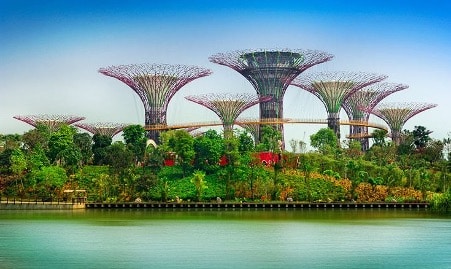
Figure 2: City in Garden in Singapore (gardensbythebay.com.sg)
4.2 Netherlands – Room for the River
The Netherlands’ Room for the River Program is a globally renowned flood management initiative that rethinks land and water use to increase safety while enhancing landscapes. With about one-third of the country below sea level, the Netherlands faced major floods in 1993 and 1995 that forced over 200,000 people to evacuate. It became clear that continually raising dikes was not sustainable, especially as sedimentation was reducing flow capacity and raising water levels.
Launched between 2007 and 2018, the program expanded river space through measures such as lowering floodplains, relocating dikes, excavating high-water channels, and creating retention basins. Rather than relying solely on engineered defenses, it introduced nature-based solutions that allow rivers to safely overflow in controlled areas during peak flows. This approach improved flood resilience, restored natural river dynamics, increased biodiversity, and created recreation spaces showing that planning with nature leads to multi-benefit outcomes.
The program was implemented through collaborative governance involving national and local authorities, water boards, and communities. It used an adaptive management approach, adjusting plans based on local needs and environmental conditions. Today, the Netherlands is advancing Room for the River 2.0, which aims to future-proof river systems against climate change impacts and ensure long-term water resilience (Stowa 2013 and NL News 2025).
One of the most iconic examples is Rotterdam’s “Water Squares”, such as the Benthemplein Water Square- multifunctional spaces that double as stormwater storage basins during heavy rain. Once dry, they transform into lively public areas for recreation, sports, and community gatherings. This showcases how the Netherlands turns environmental challenges into opportunities for innovation and liveability.
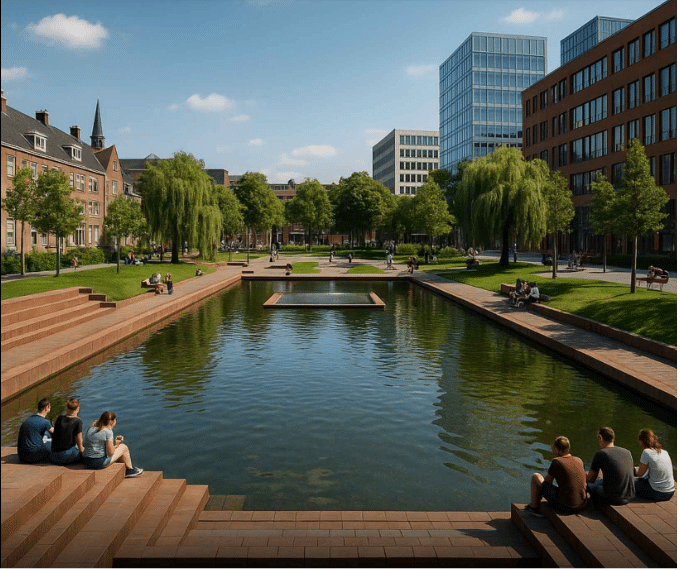
Figure 3: Water Squares in the Netherlands
4.3 Doha – Greening Flood and Stormwater Infrastructure
Doha is pioneering an integrated approach to stormwater and flood resilience that blends conventional engineered drainage with nature-based solutions. Under the Qatar National Adaptation Plan and Qatar Vision 2030, the city has begun incorporating bioswales, urban wetlands, and permeable pavements alongside traditional grey infrastructure to slow, capture, and filter runoff in critical urban areas.
The following key components form the foundation of Doha’s strategy for advancing urban flood resilience and managing extreme rainfall under intensifying climate pressures:
- Tackling Arid Stormwater Challenges: Rapid urban growth and intense, short-duration rainfall have increased impervious surfaces, placing pressure on conventional drainage systems. Existing infrastructure remains critical but requires green enhancements to manage peak runoff, reduce flood risks, and improve stormwater resilience.
- Implementation of Hybrid Blue-Green Solutions: Developing “Sponge City” features, including bioswales in residential neighborhoods and urban wetlands, to regulate stormwater runoff, naturally filter pollutants, and create multifunctional urban spaces that enhance both ecological and aesthetic value.
- Coordinated Governance and Strategic Alignment: Ensuring stormwater management is integrated with Qatar’s National Development Strategies, linking urban greening, land-use planning, and groundwater recharge through collaboration between Ashghal and environmental authorities.
- Innovative Financing and Climate Bonds: Leveraging Green Bonds, stormwater credit trading, and public-private partnerships (PPPs) to fund district-level resilience projects, ensuring sustainable long-term investment in climate adaptation.
This integrated framework demonstrates how Doha is leveraging hybrid Blue-Green Infrastructure to manage urban flood risk, support biodiversity, and create multi-functional, climate-resilient urban spaces (Our Future Water Intelligence, n.d.).
4.4 China – Sponge City pilots
China’s Sponge City Initiative, launched nationally in 2015, represents one of the largest implementations of blue-green infrastructure in the world. The programme was officially introduced by the Ministry of Housing and Urban-Rural Development to enhance urban stormwater management and improve resilience to floods and water scarcity. The initiative aims to transform urban areas so they absorb, store, filter, and reuse rainwater rather than relying solely on conventional drainage systems.
Sponge city measures include nature-based solutions such as permeable pavements, green roofs, rain gardens, bioswales, constructed wetlands, detention ponds, and urban retention basins. These interventions help manage stormwater at the source, reducing peak runoff, improving water quality, recharging groundwater, and enhancing biodiversity.
Pilot cities such as Wuhan, Shenzhen, and Xiamen have implemented sponge city concepts in both new developments and retrofitted public spaces.
4.5 Australia – Melbourne WSUD park projects
In Australia, Water‑Sensitive Urban Design (WSUD) has become a foundational approach for integrating urban stormwater management with landscape planning to improve environmental outcomes and urban livability. WSUD seeks to mimic natural water cycles, reduce runoff, improve water quality and manage stormwater as a resource rather than a waste product, supporting healthier ecosystems and urban spaces. It is implemented at multiple scales from individual buildings to streetscapes and entire districts.
A flagship example is the Fishermans Bend Water Sensitive City Strategy and its supporting Integrated Water Management (IWM) infrastructure plan, which guides stormwater and water management in one of Melbourne’s largest urban renewal precincts. This strategy aims to transform Fishermans Bend into Australia’s largest water‑sensitive city, combining climate resilience, biodiversity and water security objectives, which incorporates rain gardens, vegetated swales, tree pits, linear parks, and water storage and reuse systems.
Projects like Sydney Park’s constructed wetlands and Melbourne’s “Grey to Green” transformation along Southbank Boulevard showcase how BGI can turn conventional urban spaces into ecological and social hubs.
4.6 Germany- Sponge cities
Germany is at the forefront of integrating BGI into urban planning as part of its climate adaptation strategy. Cities like Berlin and Hamburg are pioneering the concept of the infamous “sponge cities”- urban environments that mimic natural water cycles. Through the use of green roofs, façades, urban forests, and permeable pavements, these cities manage stormwater by absorbing and filtering rain where it falls. It improves air quality, reduces urban heat, and creates recreational green spaces for residents.
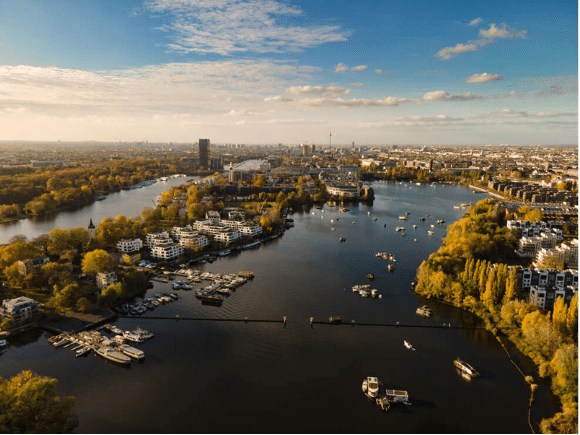
Figure 4: Sponge City (CityMonitor, 2025)
Effective BGI implementation depends on strong national policies, integration within urban master plans, and collaboration across sectors. Global benchmarks demonstrate that multifunctional BGI designs-those combining flood management, heat reduction, biodiversity enhancement, and public recreation which deliver the most sustainable and resilient outcomes. By learning from these global pioneers, urban planners, architects, and engineers can adopt proven strategies, avoid common challenges, and shape cities that are both climate-ready and people-centered.
5. The Way Forward
Global experience demonstrates that BGI should be incorporated throughout every stage of development. Utilizing project-specific checklists helps ensure effective stormwater management, ecological preservation, and enhanced public spaces. Key principles for successful BGI integration include:
- Seamlessly combining water management with green infrastructure to create multifunctional landscapes
- Incorporating nature-based solutions and hybrid grey-green systems to optimize resilience and performance
- Embedding climate adaptation strategies to prepare for extreme weather events and changing conditions
- Maximizing multifunctional benefits, such as flood mitigation, biodiversity support, thermal comfort, and recreational opportunities
By applying these principles proactively, developments can achieve resilient, livable, and climate ready urban environments that deliver long-term ecological, social, and economic value.
6. Compliance Checklist (For Designers & Planners)
To translate BGI principles into practice, the following sample checklist provides a practical reference for planners, architects, and engineers to integrate stormwater management and BGI across each design stage. This chapter considers stormwater management as it plays a critical role in overall development safety and design, as well as in addressing climate mitigation. Stormwater management integrates multiple aspects, including runoff management, flood protection, water quality, and climate resilience. Stormwater design should be treated as a phased, verifiable process, starting at Concept Design (CD), refined at Schematic Design (SD), and finalized at Detailed Design (DD).
The checklist below highlights key considerations to be addressed at each stage of the project. These items require multi-disciplinary collaboration amongst planning, infrastructure, structural, sustainability, landscape and environmental consultants to ensure cross-functional coordination and effective implementation.
| No. | Criteria | Concept Design | Schematic Design | Detailed Design |
| 1 | Confirm that the design abides by local authority requirements to not disturb the environmental balance and the geological nature of the area by not changing the course of floods and rains. |
X |
X |
|
| 2 | Assess the site’s topography, existing drainage, anticipated flood hazards through modelling, receiving water bodies, and ecological constraints to inform stormwater design. |
X |
X |
|
| 3 | Confirm that the design footprint does not include steep slopes. |
X |
X |
|
| 4 | Confirm that the asset’s design effectively mitigates risks (to the asset and natural environment) associated with a 1:100-year rainfall event during operation. |
|
X |
X |
| 5 | Verify that Low Impact Development (LID) / Sustainable Drainage Systems (SuDS) features are incorporated to reduce runoff volume, enhance infiltration, and improve water quality. |
|
X |
X |
| 6 | Demonstrate that the design includes minimal intervention along sensitive run-off areas and high flood risk zones, otherwise, opportunities for the protection and rehabilitation of these areas to lower the risk of flooding to vulnerable areas should be studied. |
X |
X |
X |
| 7 | Assess whether the design minimizes risks of erosion and sediment transport to adjacent land, coastal zones, and sensitive ecological receptors. |
X |
X |
X |
| 8 | Verify that climate change considerations (such as increased rainfall intensity) are considered in stormwater modelling and system capacity design. |
X |
X |
X |
| 9 | Verify that stormwater discharge locations are selected to minimize ecological disturbance and comply with regulatory discharge limits. |
X |
X |
X |
| 10 | Provide a brief description of stormwater infrastructure and collection/reuse opportunities. |
X |
X |
X |
| 11 | Confirm that stormwater systems are integrated with site grading plans to avoid low-lying areas that may trap or accumulate water. |
X |
X |
X |
| 12 | Ensure that receiving natural systems (wetlands, wadi, mangroves, lagoons) are protected through appropriate buffers, flow-diffusion methods, and water-quality controls. |
X |
X |
X |
| 13 | Ensure that stormwater design complies with relevant international benchmarks (SuDS Manual, US EPA BMPs) |
X |
X |
X |
| 14 | Verify that the proposed stormwater system provides adequate capacity for peak flows under the selected design storm, in accordance with local regulatory requirements. |
|
X |
X |
| 15 | Ensure that runoff coefficients used in the design accurately reflect surface types, land use, and anticipated future development conditions. |
|
X |
X |
| 16 | Confirm that all drainage layouts ensure efficient collection, conveyance, and discharge of stormwater without causing internal flooding. |
|
X |
X |
| 17 | Ensure that all hydraulic structures (channels, culverts, manholes, pipes) are sized according to the selected design storm and demonstrate compliance with international standards. |
|
X |
X |
| 18 | Confirm that stormwater quality treatment measures meet applicable pollutant removal requirements. |
|
X |
X |
| 19 | Stormwater infrastructure to favor passive measures (swales and ponds) that reduce continuation flows, erosion / scouring while maintaining any natural flow routes wherever possible. |
|
X |
X |
| 20 | Confirm that infiltration features do not adversely impact groundwater quality or groundwater table stability. |
|
X |
X |
| 21 | Verify that stormwater discharge locations are selected to minimize ecological disturbance and comply with regulatory discharge limits. |
|
X |
X |
| 22 | Ensure that the proposed system prevents backflow, saltwater intrusion, and tidal impacts in coastal areas or low-elevation zones. |
|
X |
X |
| 23 | Confirm that all stormwater management components are accessible for easy maintenance and that maintenance requirements are clearly specified in the design documentation. |
|
X |
X |
| 24 | Verify that emergency overflow mechanisms are properly designed to function during system blockages or extreme rainfall events. |
|
X |
X |
| 25 | Confirm that surface water levels, runoff volumes, and flood risks have been evaluated using current local rainfall statistics and updated regional IDF curves. |
|
X |
X |
| 26 | Ensure to allocate space reserved for future measures |
|
X |
X |
7. Conclusions
Cities around the world are under growing pressure from climate change, increased flooding, extreme heat, water scarcity, and biodiversity loss. Traditional “grey” engineering solutions alone can no longer provide the resilience cities need. This is where Blue-Green Infrastructure (BGI) enters the picture, a nature-based, multifunctional approach that integrates water systems (“blue”) and ecological/ vegetation systems (“green”) into urban planning, design, and infrastructure delivery.
8. References
Abu Dhabi Urban Planning Council (2016). Estidama Pearl Rating System – Public Realm Design & Construction – Version 1. https://www.dmt.gov.ae/-/media/Project/DMT/DMT/E-Library/0001-Manuals/PRRS/PRRS-Version-10.pdf.
Department for Environment, Food & Rural Affairs. 2025. Guidance National standards for sustainable drainage systems (SuDS) [Online]. Government of UK. Available: https://www.gov.uk/government/publications/national-standards-for-sustainable-drainage-systems/national-standards-for-sustainable-drainage-systems-suds [Accessed 2026].
Emirates News Agency (WAM). (2024). UAE ranks fifth in Quality Infrastructure for Sustainable Development Index 2024. https://www.wam.ae/en/article/b6l7frj-uae-ranks-fifth-globally-quality-infrastructure.
EPA. 2025. Stormwater Management Practices at EPA Facilities [Online]. EPA. Available: https://www.epa.gov/greeningepa/stormwater-management-practices-epa-facilities [Accessed 2026].
European Commission. 2024. Degraded ecosystems to be restored across Europe as Nature Restoration Law enters into force [Online]. Europian Commission Available: https://environment.ec.europa.eu/news/nature-restoration-law-enters-force-2024-08-15_en#:~:text=The%20law%20sets%20in%20motion,2030%20at%20the%20EU%20level. [Accessed 2026].
European Commission. 2025. Water Framework Directive [Online]. Europian Union. Available: https://environment.ec.europa.eu/topics/water/water-framework-directive_en#objectives [Accessed].
Interreg Europe (2024). Green and blue infrastructure. A Policy Brief from the Policy Learning Platform for a greener Europe. https://www.interregeurope.eu/sites/default/files/202409/Policy%20brief%20on%20Green%20and%20blue%20infrastructure.pdf.
NL News. 2025. Room for the river 2.0: preparing the Netherlands for future high and low water [Online]. NL News. Available: https://www.dutchwatersector.com/news/room-for-the-river-20-preparing-the-netherlands-for-future-high-and-low-water#:~:text=Collaborative%20approach%20to%20river%20management,decades%20to%20accommodate%20evolving%20needs. [Accessed 2026].
Nlb. 2019. Active, Beautiful, Clean Waters (ABC Waters) Programme [Online]. Available: https://www.nlb.gov.sg/main/article-detail?cmsuuid=cfc0035c-4734-4d26-8fe1-8f0c6a9e1e6c [Accessed 2026].
Our Future Water Intelligence (n.d.). Greening Flood & Stormwater Infrastructure in Doha: Hybrid Solutions, Governance, and Financing for Climate-Resilient Cities. https://ourfuturewaterintelligence.com/blogs/news/greening-flood-stormwater-infrastructure-in-doha-hybrid-solutions-governance-and-financing-for-climate-resilient-cities?srsltid=AfmBOop5Lyha-oFQkf-_97fX1KtU-w5eUMe8l4HfaDnhFHw0eu3qd2Fg.
STOWA. 2013. Room for the river.
Sustainability Directory (n.d.). Blue Infrastructure Development. https://lifestyle.sustainability-directory.com/term/blue-infrastructure-development/.
United Nations Industrial Development Organization. (2024). Quality Infrastructure for Sustainable Development (QI4SD) Index. https://hub.unido.org/qi4sd/?year=2024.
United Nations. 2018. 68% of the world population projected to live in urban areas by 2050, says UN [Online]. Department of Economic and Social Affairs. Available: https://www.un.org/development/desa/en/news/population/2018-revision-of-world-urbanization-prospects.html [Accessed 2026].
United States Environmental Protection Agency. (2025). EPA’s 2035 green infrastructure strategic agenda: Restoring nature and greening urban spaces. https://www.epa.gov/system/files/documents/2025-09/epa-green-infrastructure-2035-strategic-agenda_september2025.pdf.
World Population Review (2025). Infrastructure by Country 2025. https://worldpopulationreview.com/country-rankings/infrastructure-by-country.